


PROJECT TO IMPROVE THE LIVING CONDITIONS OF RURAL WOMEN IN THE MEYOMESSALA SUBDIVISION
AFESAF is particularly active in combating exclusion, promoting women's empowerment, and protecting human rights.

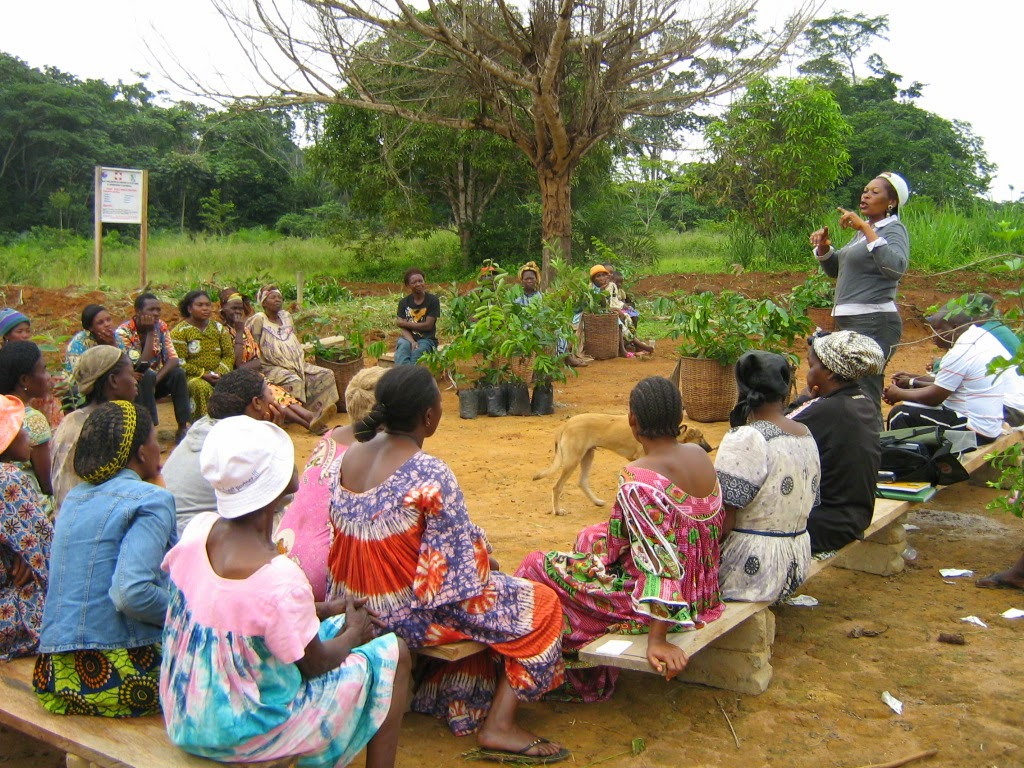
Overview of the project
The Meyomessala Subdivision is located in the Dja-et-Lobo Department, South Region of Cameroon. It comprises four traditional chiefdoms and 33 villages, with an estimated population of 59,000 inhabitants, covering an area of 2,516 km². Agriculture is the primary economic activity, relying mainly on family labor. Family farms are generally small (0.5–2 hectares under cultivation) and produce more than half of the food consumed in the area. Women carry out at least 50% of agricultural work. However, they have very limited access to productive resources, contributing to food insecurity and low household incomes. This project aims to improve the living conditions of rural women in the Meyomessala Subdivision through the planting of a variety of fruit and forest trees.
Improve the living conditions of rural women in the Meyomessala Subdivision through the planting of diverse fruit and forest trees.
Ongoing research
01/01/2011 - 31/12/2011
100 rural adults, mainly women and young people, received training on plant species and sustainable production techniques.
217 farming households planted more than 2,000 fruit and forest trees on their land.
33 villages were reached through awareness-raising activities and benefited from the project’s achievements.
-
The project improved rural women’s access to production resources and innovative farming methods through the establishment of community nurseries and training in sustainable agricultural practices.
-
It also increased and diversified food production and strengthened the incomes of rural women.
The project was funded by the Association Femmes Sans Frontières in partnership with the Embassy of Switzerland in Cameroon and the Institute of Agricultural Research for Development (IRAD).
organisation
AFESAF is particularly active in combating exclusion, promoting women’s empowerment, and protecting human rights. Its areas of work include: the protection of human rights (particularly improving access to birth certificates for the most vulnerable), the socio-economic empowerment of women, and reforestation programs.
-
Embassy of Switzerland in Cameroon.
-
Institute of Agricultural Research for Development (IRAD), Cameroon.