

Ar Jeeguen
Since its creation in 1966, the Paul Ricard Oceanographic Institute has combined scientific research with public awareness initiatives to “understand, share knowledge about, and protect the sea."

Overview of the project
In Senegal, rural communities are facing a significant decline in access to seafood products. This scarcity of fishery resources is a direct consequence of population growth and overfishing. To address this challenge, the Ar Jeeguen project—developed through a multi-stakeholder public-private partnership—offers an innovative and long-term solution by promoting local aquaponic farming. The project is implemented in partnership with the Veolia Foundation and the following local partners: the National Aquaculture Agency (ANA), the Université du Sine Saloum El-Hâdj Ibrahima NIASS (USSEIN), and the Interministerial Committee for the Fight Against Irregular Migration (CILMI).
The project involves the construction of hybrid fish farms managed and operated by Women’s Economic Interest Groups (EIGs), generating positive impacts on food security, the local economy, and, most importantly, the social inclusion and economic empowerment of women in Senegal. Each farm consists of a fish pond supplied with water from a solar-powered well, where tilapia are raised. The nutrient-rich water from the pond, enriched with nitrogen, phosphorus, and potassium from fish waste, is then used to irrigate nearby vegetable crops, significantly increasing agricultural yields.
Ar Jeeguen is an innovative local fish farming project based on the ambition to recreate a sustainable and environmentally responsible food production system while promoting the sustainable use of fisheries resources, advancing scientific research, and engaging local communities, particularly women and young people.
Ongoing research
Beginning: 2020, project still in progress
- Creation of 4 operational aquaculture farms in Senegal.
- Inauguration of a fully operational hatchery with an annual production capacity of 1 million fingerlings.
- Job creation: approximately 10 jobs per farm.
- Annual revenue generated through sales: 30 million CFA francs per farm (over €45,000 per year).
- Reduced energy consumption.
- Reduced water consumption.
- Feed Conversion Ratio (FCR): by integrating vegetable production with fish farming, the aquaponics system demonstrates its full potential. Since fish feed—the system’s only external input—also contributes to vegetable growth, the average feed conversion ratio reaches 0.18, based on trials conducted at the Paul Ricard Oceanographic Institute’s pilot farm.
- Improved food security through the sale of farmed fish and locally grown fruit and vegetables to surrounding villages.
- Creation of stable jobs and social inclusion opportunities for women and young people in rural Senegal.
- Reduced pressure on wild fish stocks.
- Contribution to 10 Sustainable Development Goals (SDGs).
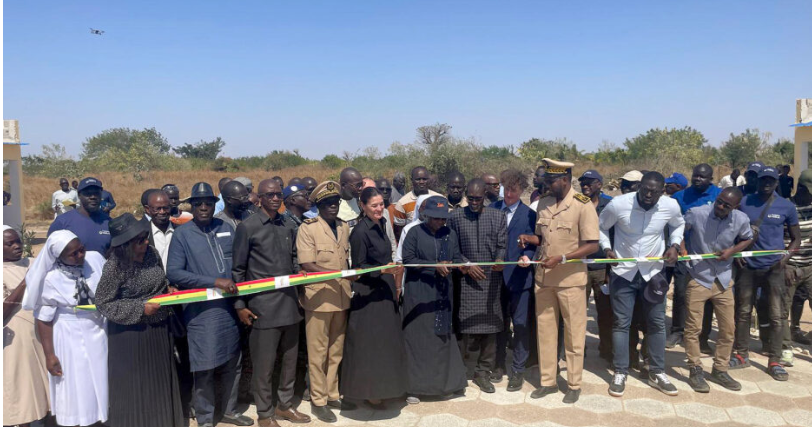
- Support for national priorities: the hatchery inaugurated in January 2025, in the presence of Senegal’s Minister of Fisheries and Maritime and Port Infrastructure, is part of the country’s national strategy to promote sustainable aquaculture.
- Student training: a partnership agreement with the Université du Sine Saloum enables students to undertake internships and receive practical training in aquaculture techniques on the project’s farms.
The project was financed through a low-interest loan from the Veolia Foundation, complemented by grants and in-kind philanthropic donations, for a total of €800,000. Farm revenues repay the initial loan, enabling the creation of new farms and ensuring the model's scalability.
organisation
Since its creation in 1966, the Paul Ricard Oceanographic Institute has combined scientific research with public awareness initiatives to “understand, share knowledge about, and protect the sea.” The Institute pursues a dual mission: on the one hand, to develop innovative scientific research, and on the other, to share the results of this research and make them accessible to the widest possible audience. As one of the major challenges of the 21st century lies in financing the ecological transition, the Institute goes beyond its research programmes by mobilizing blue finance tools to support efforts and initiatives that promote greater sustainability across the maritime and blue economy sectors.
The Paul Ricard Oceanographic Institute serves as the scientific partner, providing expertise and overseeing project implementation.
The Veolia Foundation is the project’s initiator, principal funder, and economic partner.
The Interministerial Committee for the Fight Against Irregular Migration (CILMI) and the National Aquaculture Agency (ANA) are local partners committed to implementing a sustainable aquaculture policy in Senegal.
The ANA is responsible for the operational management of the hatchery.
The Université du Sine Saloum El-Hâdj Ibrahima NIASS (USSEIN) in Kaolack, Senegal, is a key institutional partner working with the “Aar Aduna Ar Jeeguen” Women’s Economic Interest Group (EIG) to train students in aquaculture techniques at the Mbodiène farm.
Ar Jeeguen is built around a coordinated, multi-stakeholder governance model known as the “Magic Square”. This innovative framework is based on four complementary pillars essential for driving action: science, local stakeholders, the private sector, and public institutions. By bringing together these four pillars, the model overcomes the main barriers to transdisciplinary collaboration and paves the way for sustainable, scalable solutions.